Exhibition in Palermo · Ended 14 November 2015
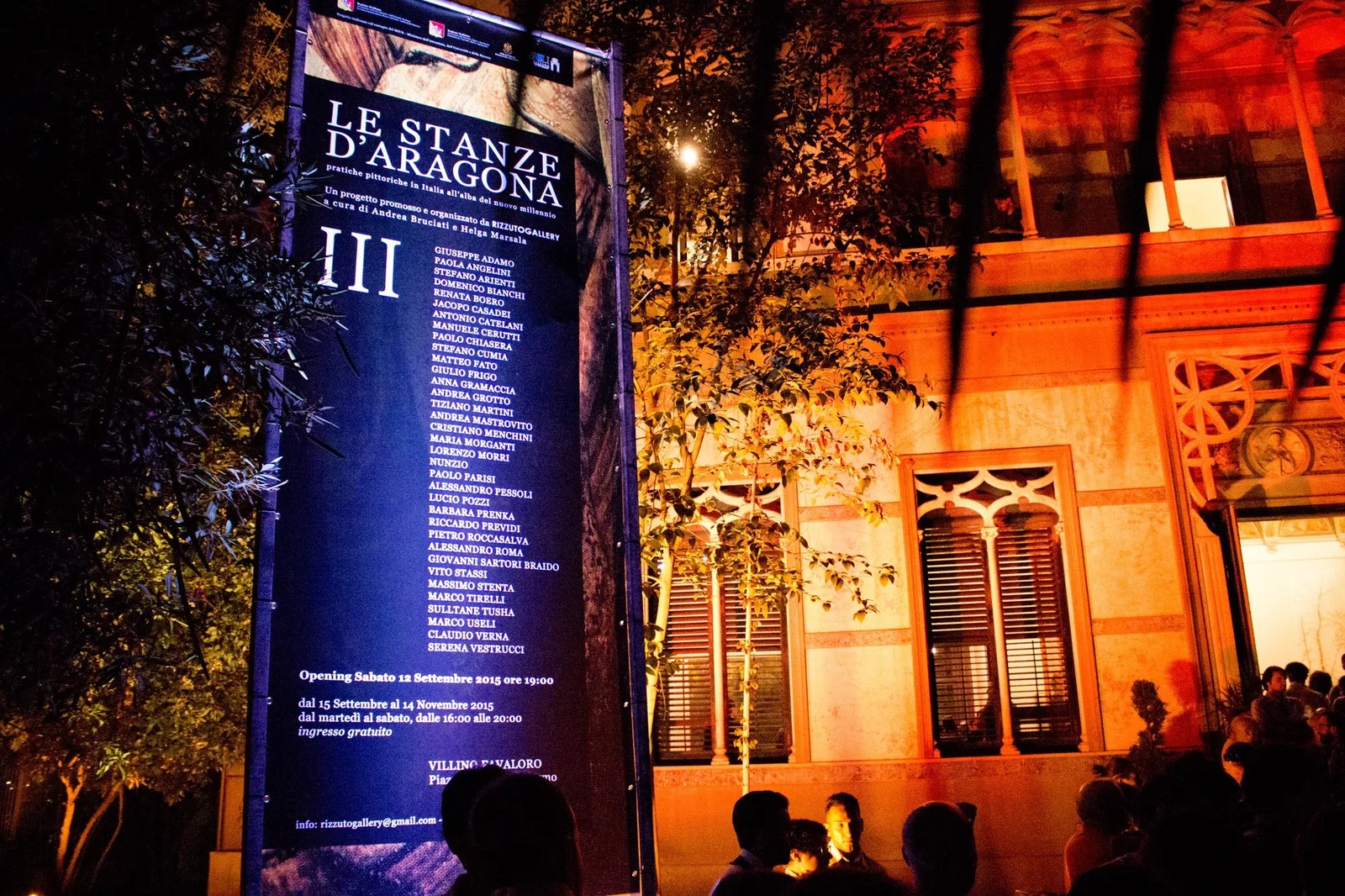
LE STANZE D'ARAGONA III @Villino Favaloro
Antonio Catelani, Lucio Pozzi, Paola Angelini, Stefano Arienti, Domenico Bianchi, Renata Boero, Jacopo Casadei, Manuele Cerutti, Paolo Chiasera, Matteo Fato, Giulio Frigo, Anna Gramaccia, Andrea Grotto, Tiziano Martini, Andrea Mastrovito, Cristiano Menchini, Maria Morganti, Lorenzo Morri, Nunzio, Paolo Parisi, Alessandro Pessoli, Barbara Prenka, Riccardo Previdi, Pietro Roccasalva, Alessandro Roma, Giovanni Sartori Braido, Vito Stassi, Massimo Stenta, Marco Tirelli, Marco Useli, Claudio Verna, Sulltane Tusha, Serena Vestrucci, Giuseppe Adamo, Stefano Cumia, Gaia Fugazza
12 September – 14 November 2015
Text
LE STANZE D’ARAGONA – Pratiche pittoriche in Italia all’alba del nuovo millennio (Capitolo III) @Villino Favaloro
The Villino Favaloro in Palermo - will open for the first time to the public after 13 years of closure - hosting the third and final chapter of the trilogy exhibitions “Le stanze d’Aragona (The Rooms of Aragon)”, curated by Andrea Bruciati and Helga Marsala, with the works of thirty-six Italians artist of different generations, between teachers and mid-career of international and emerging artists on the contemporary scene.
The project, promoted and organized by RizzutoGallery (Palermo), is in collaboration with the Municipality of Palermo and the Superintendence for Cultural and Environmental Heritage; with support ERSU (Regional Agency for the Right to Education) and under the patronage of the Culture and Identity Sicilian - Sicilian Region.
The project “Le stanze d’Aragona (The rooms of Aragona)” was born with the object to launch a survey of Italian painting scene in recent years, filtered through the eyes of two curators, with special attention paid to new trends of abstraction and conceptual painting.
The structure of the project was divided into two smaller exhibitions, composed of eight artists each and housed in the RizzutoGallery between March and May 2015; an anticipation of the larger work, which will take shape with the third and final round at the Villino Favaloro, where you'll add twenty artists at the sixteen artists already involved. The works was partly created especially for the event and in part selected by the artists, their most recent production and more significant.
"Choose the city of Palermo and elect a title from 15th century flavor, that brings to the famous international season of Sicilian culture, culminating in the reign of Ferdinando I and Alfonso d’Aragona, it is no coincidence. It's probably also a provocation. “The rooms of Aragona” starts from a place now considered marginal, which was once hotbed of avant-garde and extraordinary talents, to reiterate that the heart of things, and the substance, and the look different, do not belong to the forms, not to provisional balances, not hierarchies and trends accredited. Even better, sometimes it is around the bright suburbs - in the world, but especially of thought - that the many possible centers rotate and redefine." [Helga Marsala]
Thirty-six artists who have joined the project, part of which works by creating ad hoc. Almost all the artists are devoted mainly to painting, they belong to different generations and come from different cities and places:
Giuseppe Adamo (Alcamo, Palermo, 1982), Paola Angelini (San Benedetto del Tronto, 1983), Stefano Arienti (Asola, Mantova, 1961), Domenico Bianchi (Rome, 1955), Renata Boero (Genova, 1936), Jacopo Casadei (Cesena, 1982), Antonio Catelani (Florence, 1962), Manuele Cerutti (Turin, 1976), Paolo Chiasera (Bologna, 1978), Stefano Cumia (Palermo, 1980), Matteo Fato (Pescara, 1979), Giulio Frigo (Arzignano, Vicenza, 1984), Gaia Fugazza (Milan, 1985), Anna Gramaccia (Perugia, 1980), Andrea Grotto (Schio, Vicenza, 1989), Tiziano Martini (Soltau, Germany, 1983), Andrea Mastrovito (Bergamo, 1978), Cristiano Menchini (Viareggio, 1986), Maria Morganti (Milan, 1965), Lorenzo Morri (Jesi, 1989), Nunzio (Cagnano Amiterno, L'Aquila, 1953), Paolo Parisi (Catania, 1965), Alessandro Pessoli (Cervia, 1963), Lucio Pozzi (Milan 1935), Barbara Prenka (Gjakova, Kosovo, 1990), Riccardo Previdi (Milan, 1974), Pietro Roccasalva (Modica, 1970), Alessandro Roma (Milan, 1977), Giovanni Sartori Braido (Mestre, Venice, 1989), Vito Stassi (Palermo, 1980), Massimo Stenta (Trieste, 1991), Marco Tirelli (Rome, 1956), Sulltane Tusha (Durres, Albania, 1988), Marco Useli (Nuoro, 1983), Claudio Verna (Guardiagrele, Chieti, 1937), Serena Vestrucci (Milan, 1986).
Artists widely recognized internationally, in some cases already historicized, with the new generations, which are direct or indirect references: a way to draw lines of continuity or divergence, identifying processes of germination and intellectual vision.
"The abstraction guide the trajectory of the project, but not the exhausts. So artists are present for which the processing of the world passes through fluid shapes, geometric, rhythmic, gestural or of signs, analytical or synthetic. Artists at the same time exceed, in many cases, the most icy formalism, reaching an epiphany visual made of vibration and osmotic exchanges between the nature, the time and the space, between objects and their traces, as between the surface size epidermal and the process of painting as alchemical processing, cosmological, perceptual or spiritual. Radical abstraction, then, but also symbolic and formal.
Likewise, the work around abstraction meets individual searches that include references to the figurative, but always in a key brain, highly conceptual. Are excluded, for coherence and critical direction, all those who choose the research or romantic fiction, realism or fantasy story, or even the political and social survey. Painting, finally, is read here in its strictest form, even traditional (painting-painting), but also in the experience of hybridization with other languages - from sculpture to architecture, through video and installation - placing more as aptitude, vocation, eye focus and thought." [Andrea Bruciati and Helga Marsala]
In a time when Italy recovers the language of painting as a practice à la page, the exhibition starts from the need for wide-ranging analysis, including reflections aesthetic, cultural, language and system.
"The great tradition of Italian painting, the last part of the century is not sufficiently rewarded by the international context, it remains a reality around which recover consciousness and build dynamics of thought, intellectual inquiry, and also of conveying the institutional market. That painting is one of the greatest expressions of Italian culture, in dialogue with the international events, remains the focal point. Reigniting a debate thick on the contemporary, the recent art history, future directions to imagine a present and shaken by radical changes." [Andrea Bruciati]
Jewel of Art Nouveau in Palermo, is located in the heart of the city, in the central via Dante, the Villino Favaloro it was designed and built by the famous architect Giovan Battista Filippo Basile between 1889 and 1891; His son Ernesto Basile, completed the structure between 1913 and 1914. The house before belonged to the family Favaloro and then to Senator Giuseppe Di Stefano. With its unique garden, his greenhouse in iron and glass, the precious octagonal tower with decorative mosaic of Salvatore Gregorietti and halls full of frescoes and paintings of flowers, it is considered the first example of modernist architecture in Palermo.
"The Regional Office of Culture and Environment of Palermo, pending the outcome of the procedures to 'set-up of the Museum of Photography "Enzo Sellerio", of which the Villino Favaloro is institutional, decided to reopen the same exceptionally promoting the exhibition "The rooms of Aragona". A special occasion for citizenship and tourists, who will temporarily return an important monument of the city, waiting for the reopening definitive ". [Superintendence Cultural Heritage, Palermo]
The exhibition will be accompanied by a bilingual catalog in Italian and English, with a wide selection of images and critical texts, related to the entire trilogy. The volume will be presented during the exhibition.
Installation views


 Stefano Arienti, Robinia 11, 2009 (part.) (Courtesy l'artista), Inchiostro oro su telo antipolvere, 312 x 169,5 cm
 Paolo Chiasera, Magic Scenic, 2011 (Courtesy l'artista e galleria Francesca Minini, Milano), Olio su tela, 60 x 80 cm
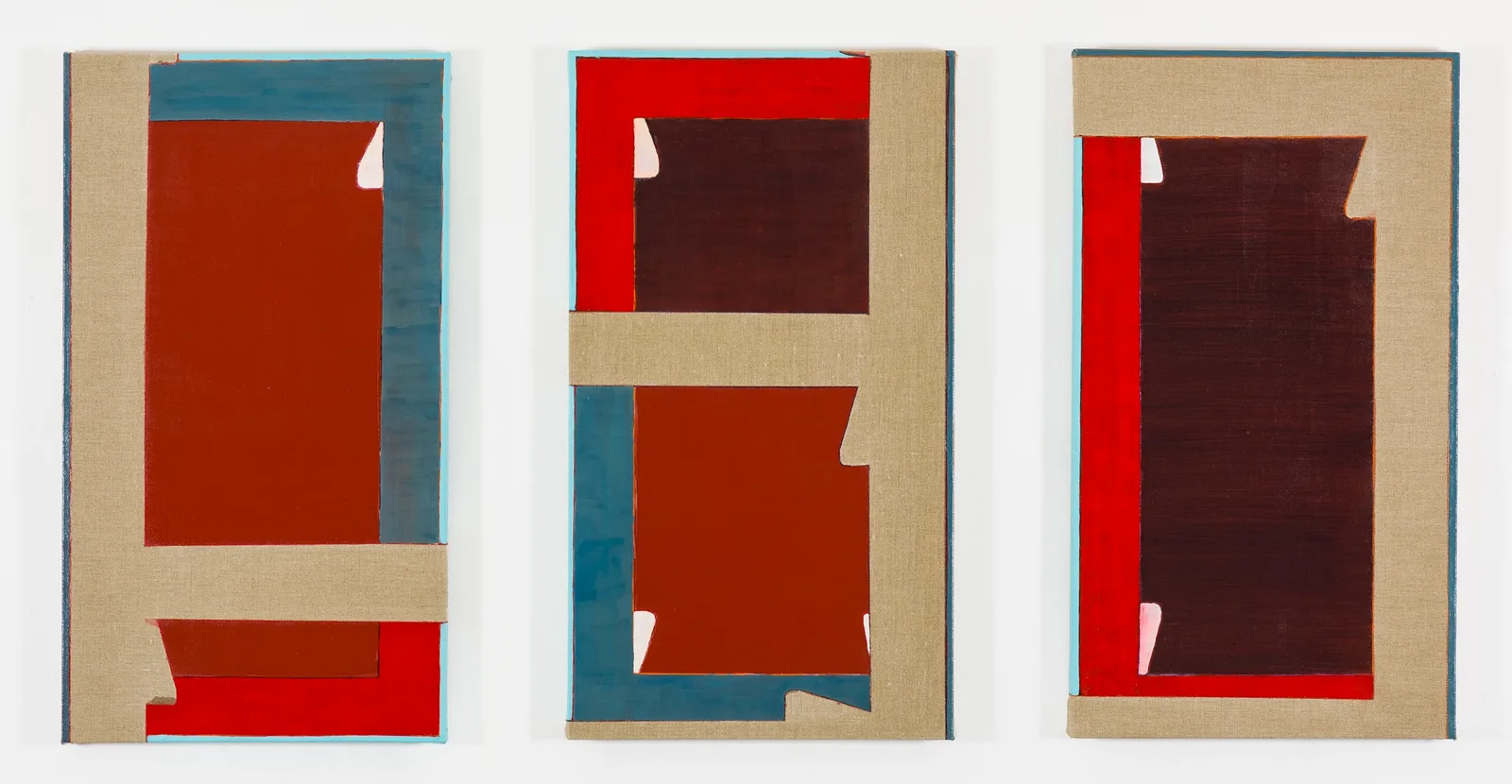
 Manuele Cerutti Diade (I), 2015 (Courtesy l’artista e Guido Costa Projects, Torino), Olio su lino, 40 x 60 cm
 Vito Stassi, Untitled, 2015 (Courtesy l'artista), Olio su tela, 45 x 55 cm
 Andrea Mastrovito, Albert Camus est mort, 2014 (Collezione privata, Ginevra), Matita su materiali vari, 60 x 60 x 70 cm
 Giulio Frigo, Tuuu..., 2014 (Courtesy l'artista e galleria Francesca Minini), Olio, tempera all'uovo su tela, filo, 53 x 43 cm
 Pietro Roccasalva, Senza titolo, 2001 (Courtesy l'artista e galleria ZERO, Milano), Olio su tela, 79 x 71 cm
 Alessandro Pessoli, Super Vip, 2015 (Courtesy l'artista e galleria ZERO, Milano), Olio, acrilico e spray su tela, 66,5 x 41 cm
 Alessandro Pessoli, Spiaggiati, 2015 (Courtesy l'artista e galleria ZERO, Milano), Olio, acrilico e spray su tela, 66,5 x 41 cm
 Alessandro Roma, Untitled, 2013/14 (Courtesy l'artista e galleria Sara Zanin, Roma), Olio, spray, matita, acetato e collage su carta, 50 x 39 cm
 Paola Angelini, Ai tuoi occhi, 2013 (Courtesy l'artista e galleria Massimodeluca, Venezia), Olio su tela, 24 x 18 cm
 Jacopo Casadei, Gustavo, 2015 (Courtesy l'artista), Olio su tela, 50 x 40 cm
 Lorenzo Morri, Jolly, 2014 (Courtesy l'artista), Olio e spray su tela, 100 x 70 cm
 Barbara Prenka, Collage, 2014 (Courtesy l'artista e galleria Massimodeluca, Venezia), Serie variabile di collage su carta, 29 x 21 cm cad.
 Giovanni Sartori Braido, Strutture ammassate in uno spazio 2, 2015 (Courtesy l'artista e galleria Massimodeluca, Venezia), Acrilico e polimeri sintetici su tela, 125 x 120 cm
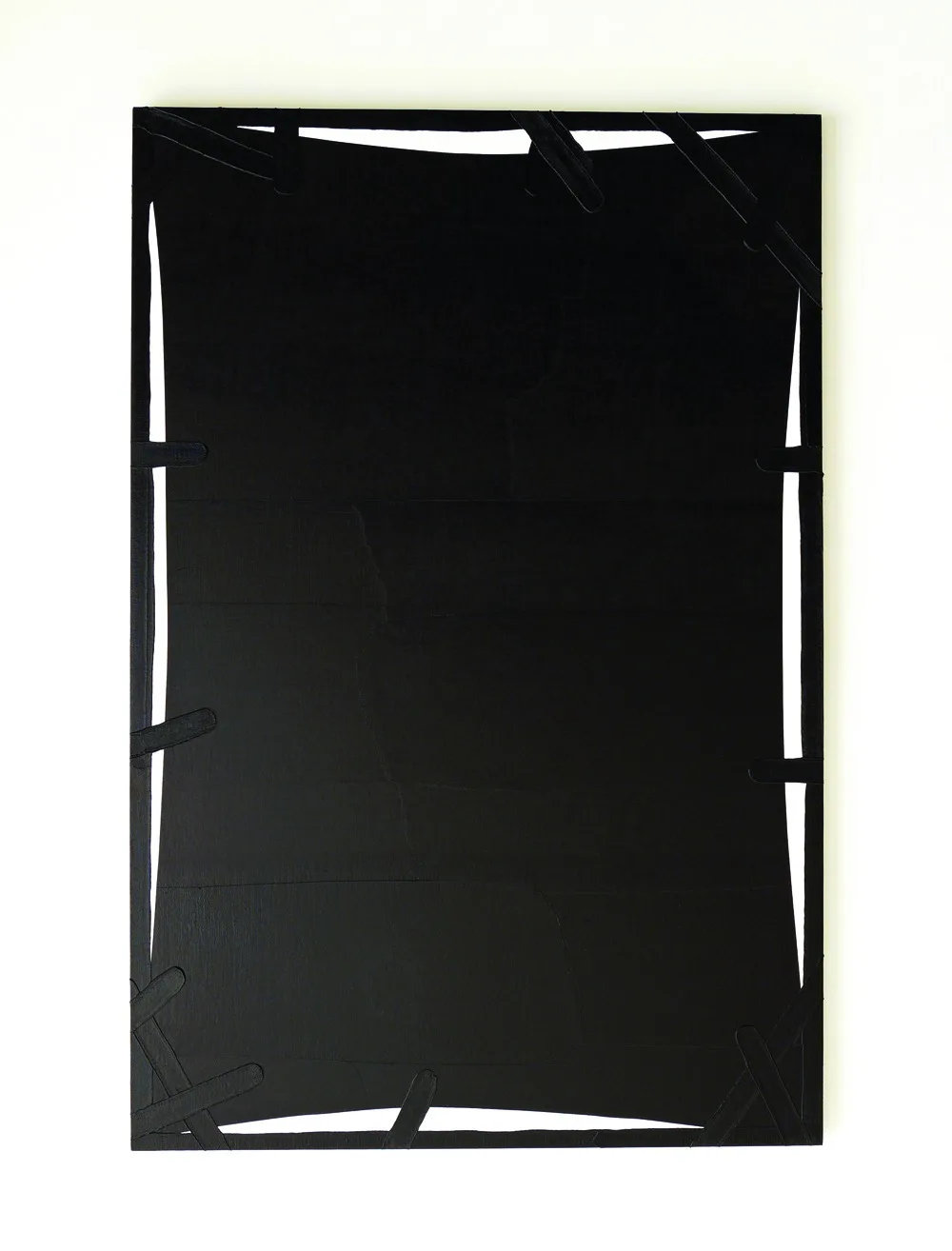
 Massimo Stenta, Black Painting N16, 2015 (Courtesy l'artista), Olio su cotone, 190 x 140 cm
 Paolo Parisi, Unitè d'habitàtion, 2013 (Courtesy l'artista), Olio su tavola, 100 x 93 cm
 Paolo Parisi, Unitè d'habitàtion (Four reds), 2013 (Courtesy l'artista), Olio su tavola, 44 x 31 cm
 Tiziano Martini, Untitled, 2015 (Courtesy l'artista e A+B gallery, Brescia), Pittura acrilica, prime ed emulsione acrilica, sedimenti pittorici, sporcizia, imprimitura acrilica, 160 x 130 cm
 Maria Morganti, Frammento di pittura, 2013 (Courtesy l'artista, Otto Zoo, Milano; Caterina Tognon, Venezia), Pietra, pongo, pittura a olio, legno, calcedonio, 18 x 12 x 2,5 cm | 3,5 x 2 x 2,2 cm
 Anna Gramaccia, Untitled, 2015, Pantone su carta incisa, 75 x 53 cm
 Cristiano Menchini, Foresta di cristallo, 2015 (Courtesy l'artista), Acrilico e acquerello su tela, 170 x 160 cm
 Andrea Grotto, R.W. Wood abat-jour, 2015 (Courtesy l'artista), Acrilico e olio su tela, cera e paraffina colorata, 163 x 146 cm | 100 x 5 x 4 cm
 Sulltane Tusha, Spolverio lunare, 2014 (Courtesy l'artista), Olio su tela, 188 x 172 cm
 Matteo Fato, Senza titolo (Nuvola II), 2015 (Courtesy l'artista), Olio su lino, cassa da trasporto in multistrato e specchio, 64 x 74 cm
 Renata Boero, Germinazione. Sequenza di fiori di carta, 2014 (Courtesy l'artista), Germinazione di sostanze naturali su carta fatta a mano, 60 x 180 cm
 Claudio Verna, Controluce 4, 2011 (Courtesy l'artista e galleria Monitor, Roma), Acrilico su tela, 150 x 120 cm
Works
Oil on canvas
137 × 92 cm
Egg tempera, oil, pigmented gesso on linen
75 × 42 cm
Info
Dates
12 September – 14 November 2015
Contact
+39 091 6496654
info@rizzutogallery.com