Martina Sauter
Her work lies at the intersection of photography and film, two languages she expertly intertwines to construct visual spaces charged with ambiguity and narrative tension.
Trained as a professional photographer between 1997 and 1999, Sauter then furthered her research at the Kunstakademie Düsseldorf from 1999 to 2006, in the class of Thomas Ruff, a key figure of the Düsseldorf School. In 2006, she earned the title of Meisterschülerin, the Academy's highest honor, reserved for the most promising students. That same year, she received the Thieme Art Award.
Her three-year photography apprenticeship provided Sauter with a solid technical foundation, which she immediately put to good use by entering the class of one of the most influential contemporary photographers. At the Kunstakademie, Sauter draws on the legacy of the so-called Düsseldorf School—the tradition inaugurated by Bernd and Hilla Becher and carried forward by artists such as his teacher Thomas Ruff, Thomas Struth, Candida Höfer, and Andreas Gursky—but he develops it in a personal direction, where the formal rigor of the German tradition opens itself to contamination with the language of cinema and television.
Martina Sauter constructs images that do not simply document reality, but interrogate its very nature, suspending the viewer in a liminal zone between fiction and truth. The core of her research lies in the creation of images that defy certain classification.
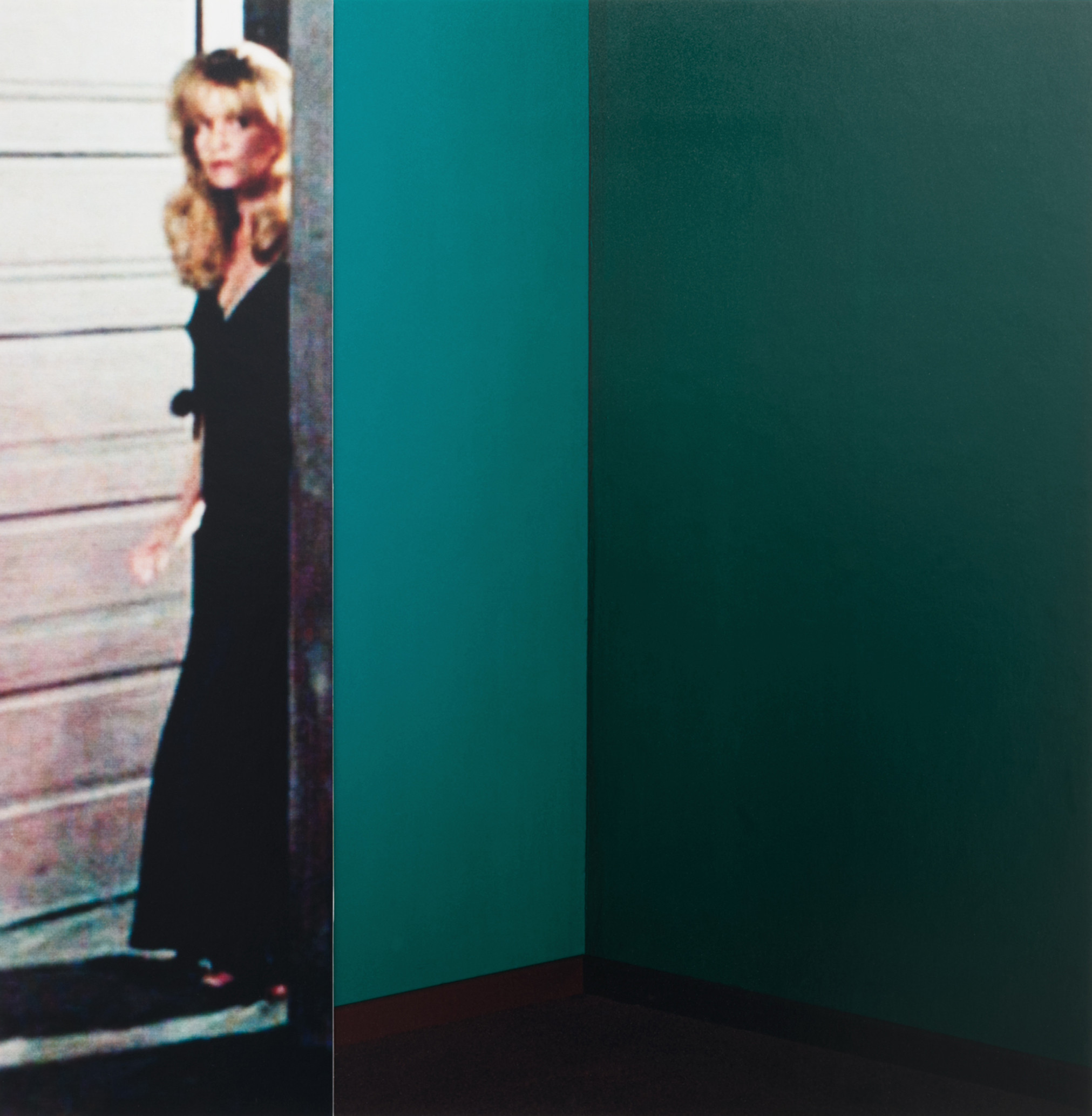
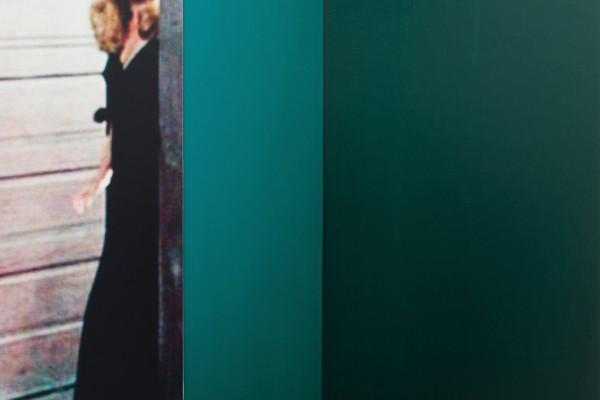
The artist combines frames from films, television series, music videos, and magazines with photographs of settings she has staged and shot herself. The result is a photographic collage in which two visual modes—cinematic found footage and art photography—merge into a single surface, generating a sense of disorientation and déjà vu in the viewer.
Sauter never directly shows "terror," but suggests it, distilling a strong suspense: the viewer senses that something is about to happen—or has just happened—but the image leaves them in suspense, forcing them to project their own narrative. The scenes chosen are often moments "between two actions," in which a character has just exited the scene or is about to enter it.