Morgaine Schäfer
Morgaine Schäfer was born in 1989 in Wolfsburg, Lower Saxony, Germany, to a Polish mother and a German father. Her dual cultural heritage—raised in newly reunified Germany, with Polish roots on her mother's side—is the driving force behind all her artistic research. As she herself explains in a conversation with Barbara Hofmann-Johnson: "As a child, I had a latent feeling of being out of place. I sensed that my mother was torn between her current life and the one she had left behind."
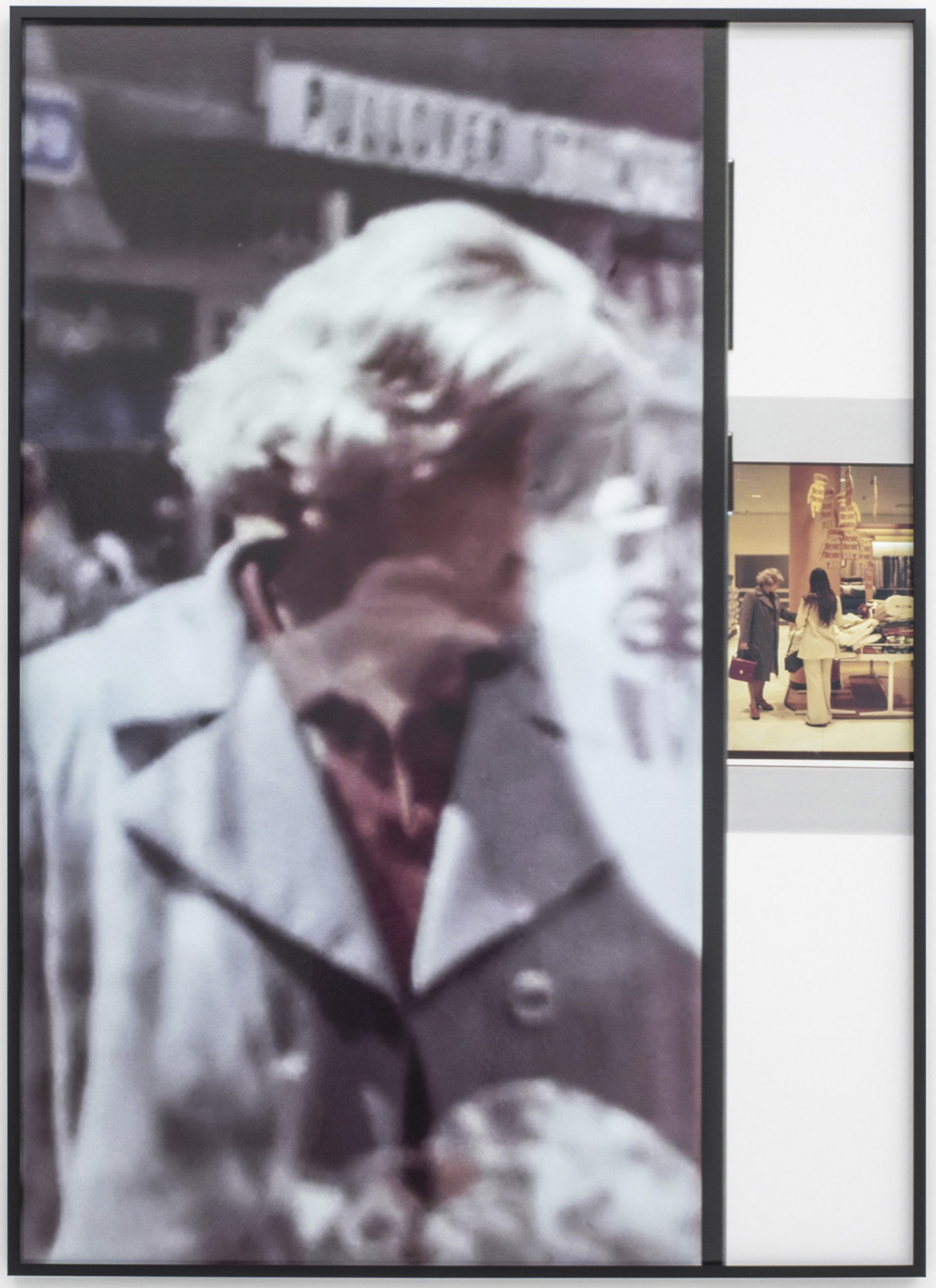
Schäfer's mother, originally from Poznan, moved from Poland to West Germany after meeting the artist's father, Bernd Werner Schäfer. He photographically documented family life with hundreds of 35mm slides in the 1970s and early 1980s, creating an archive that would become the raw material for his daughter's work decades later. This visual legacy primarily portrays the artist's mother—recently arrived from Poland—in moments of everyday life, travels, family scenes, and the process of orienting herself in a new country, a foreign language, and a different culture.
Schäfer's hometown, Wolfsburg, is no anecdote: it is the historic headquarters of Volkswagen and a place deeply influenced by German automotive culture. This element resurfaces in some of his early series, particularly Autobahn A-Z, and reveals an early attention to the themes of movement, geographical displacement, and the identity of place.
The founding gesture of Morgaine Schäfer's work is reframing. The artist doesn't shoot from scratch: she begins with a pre-existing family archive—the hundreds of 35mm slides taken by her father—and subjects it to a process of reworking that is both analytical and poetic. This isn't restoration, nor nostalgia: Schäfer doesn't seek to preserve images of the past as they are, but transforms them into new objects, constructing what we might call "a fabricated rather than inherited memory."